Selling Inherited Property As-Is in Michigan
Seller Guides, Inherited Property, Michigan Real Estate
Selling an Inherited House As-Is: What Families Should Know First
Inheriting a house is rarely just a real estate decision, it is often tied to memories, grief, family responsibilities, and practical questions about what to do next. The home may still hold belongings, need repairs, or be wrapped up in probate and paperwork. At the same time, there can be pressure to move quickly, settle the estate, or resolve expenses.
When an inherited property needs work, many families assume they must fully clean, repair, or renovate the home before they can sell. That is not always the case. In many situations, selling an inherited house as-is is a realistic option, the key is choosing a path that matches the property’s condition, the family’s goals, the title situation, and local buyer demand.
The First Thing Families Should Know
You do not necessarily have to fix everything before you sell an inherited property. Many Michigan inherited homes are sold in their present condition when the family does not want to manage repairs, renovation projects, contractor scheduling, full clean-out, staging, or long preparation timelines, especially when those steps require upfront cash the estate may not have.
An as-is home sale generally means the seller does not plan to complete major repairs before closing. It does not mean the family should hide known issues. Honest disclosure, realistic pricing, allowing access for buyers, and clear expectations are still important parts of a successful sale — whether you choose a direct cash offer, an as-is MLS listing, or another strategy.
You may not need to renovate the home. You do need a clear understanding of its condition, ownership, timeline, and available selling options.
Common Challenges With Inherited Properties
Deferred Maintenance
Many inherited houses have not been updated in years. It is common to see older roofing, plumbing or electrical concerns, peeling paint, worn flooring, dated kitchens or bathrooms, HVAC issues, water staining, or exterior maintenance that has fallen behind. These conditions do not automatically make a distressed inherited home unsellable, but they do affect pricing, buyer expectations, financing options, inspections, and how the property should be marketed.
Personal Belongings and Clean-Out
Inherited homes often contain decades of belongings furniture, photographs, documents, clothing, tools, collections, and storage items. Sorting through everything can be both emotional and time-consuming. Families should decide what is realistic to remove before marketing the property and what may need to stay with the home. Some buyers are comfortable with a partial or full clean-out after closing, while others may expect the home to be mostly cleared.
Family Communication
When multiple heirs are involved, priorities can differ. One person may want a fast sale, another may focus on the highest possible price, while someone else may prefer to keep the property or wait longer to sort belongings. Clarifying expectations early including whether to consider a cash sale, an inherited property as-is listing, or another structure can reduce stress later in the process.
Title, Probate, and Signing Authority
Before selling a probate property, the family needs to understand who legally owns the house, whether probate is required, whether a personal representative or executor has been appointed, and who has authority to sign listing agreements and closing documents. It is also important to confirm that all required parties are on the same page. For specific questions about probate, title, or estate authority, families should consult a probate attorney, title company, or other qualified legal professional.
How to Decide Between a Cash Sale, an As-Is Listing, or Another Route
There is no single “right” answer for every Michigan inherited property. Most situations fall into one of three broad paths, each with its own trade-offs.
Option 1: Direct Cash Sale
A direct cash sale may be appropriate when speed and simplicity are the highest priorities, the house needs significant repairs, or the family does not want showings, open houses, or extensive marketing. It can also fit when the property may have limited financing eligibility. In exchange for convenience, the price may be lower than a fully marketed retail sale. A cash sale is one option — not automatically the best or only option in every case.
Option 2: Traditional As-Is Listing
Listing the inherited house needing repairs on the MLS “as-is” can make sense when there is reasonable retail demand, the property can be shown safely, and the family has the time and capacity to allow access. An as-is listing can reach owner-occupant buyers, investors, and renovation buyers some using cash and some using financing programs suitable for homes that need work. Financed offers may still involve appraisals, inspections, and lender repair requirements, so expectations should be set accordingly.
Option 3: A Structured Alternative Strategy
Some situations call for a more specialized structure for example, when a direct cash price feels too low, the property needs work, and a traditional listing is not straightforward. In these cases, a coordinated on-market strategy, such as a novation-style arrangement, may allow broader exposure while working with an investor or wholesaler already involved in the deal. You can learn how the novation model works to see when it might apply.
Not every inherited property qualifies for novation. Each situation should be reviewed individually — considering property condition, seller expectations, existing contract terms, market demand, timeline, occupancy, title status, and the practical ability to prepare and show the property.
Questions Families Should Ask Before Choosing a Selling Strategy
Use this checklist to clarify which path cash sale, as-is listing, or another structure may be practical for your family’s situation:
How quickly does the family want or need to sell?
Who has legal authority to sign for the estate or property?
Do all necessary heirs or decision-makers agree on the plan?
Is the property currently occupied by a tenant, family member, or someone else?
What is owed on the house, including mortgages or home equity loans?
Are there known liens, taxes, association dues, or utility balances?
What repairs or issues are immediately visible or already known?
Can the property be entered and shown safely to prospective buyers?
How much clean-out is realistic before listing or closing?
Is the family able or willing to pay for any repairs or updates?
Does the local market have buyers for an as-is property in this condition?
Is a potentially higher price worth a longer or more involved process?
Is convenience more important than maximizing exposure and showings?
Is there an existing contract, investor, or wholesaler already involved?
The answers to these questions help narrow down whether a cash sale, an as-is listing, or a structured alternative strategy is likely to be the most practical route.
What Families Should Prepare Early
Confirm Decision-Making Authority
Clarify who can legally act for the estate or property such as a personal representative, executor, trustee, or surviving joint owner. This step helps avoid confusion when it is time to sign listing agreements, offers, or closing documents. For legal questions about authority, families should work with a qualified attorney or title professional.
Gather Property and Financial Information
Collect basic information such as mortgage statements, property tax records, utility balances, insurance details, association dues, and any known liens. If available, keep repair estimates, prior inspection reports, existing purchase agreements, and key probate or estate documents together. This information helps any professional you work with provide a more accurate assessment of your options.
Clarify Occupancy
Determine whether the inherited house is vacant, occupied by a tenant, occupied by a family member, or occupied without a formal agreement. Occupancy affects access, showing schedules, insurance, and the type of buyers who may be a good fit. It can also influence whether a cash buyer, as-is listing, or structured novation strategy is more practical.
Determine the Realistic Clean-Out Plan
Decide whether the family will remove everything, focus on important personal items, hire an estate-sale company, or use a professional clean-out service. In some transactions, it is acceptable to leave certain contents with the property as long as that is clearly communicated and agreed upon in writing with the buyer.
Document the Property’s Condition
Create a simple list of known issues such as roof leaks, plumbing concerns, foundation cracks, or non-working systems. Photos and notes can help keep everyone on the same page. The goal is not to hide problems, but to understand them so the pricing, marketing, and negotiation strategy for the as-is home sale can be aligned with reality.
Does Selling As-Is Mean Accepting the Lowest Offer?
Selling an inherited house as-is does not automatically mean accepting the lowest possible price. Outcomes depend on property condition, local demand, pricing strategy, marketing exposure, buyer type, financing availability, access, title readiness, family timeline, and how the transaction is structured. A low direct offer may be appropriate in some circumstances for example, when a property needs extensive work and speed is essential but families benefit from understanding their alternatives before making a decision.
What Can Delay the Sale of an Inherited Property?
Unclear signing authority or questions about who can sell
Probate timelines and required court approvals
Disagreements among heirs about price, timing, or repairs
Unknown liens, tax issues, or unpaid association balances
Occupancy challenges or limited access for buyers and inspectors
Incomplete property information or missing documents
Unrealistic pricing that does not reflect the condition or market
Title problems that require additional research or approvals
Delayed decisions about clean-out or personal property
Existing contracts or assignments that must be resolved
Buyer financing complications, appraisals, or repair conditions
Identifying these issues early cannot guarantee a smooth closing, but it often reduces surprises and helps everyone set realistic expectations.
A Clear Review Can Help the Family Move Forward
Managing an inherited house can feel overwhelming because the family is often balancing emotional, financial, and practical responsibilities at the same time. The good news is that you usually have more than one path. You may not need to repair everything, the property may be sold as-is, a cash sale is not the only choice, a listing may be appropriate, and a structured alternative such as a novation strategy may be worth reviewing in the right circumstances.
The most helpful strategy typically comes from looking at the whole picture property condition, title, occupancy, contracts, and family goals instead of rushing into the first offer that appears. An informed, honest review can make the next step feel more manageable.
Not Sure Which Option Fits the Property?
If your family is deciding what to do with an inherited house, The Novation Agent can help review the property, condition, timeline, and available selling options. The purpose is to provide a straightforward assessment so you can understand the practical paths forward.
Request a Property Review Call or Text Peggy
Or email [email protected] to start the conversation.
A property review does not guarantee that the home will qualify for a particular strategy, sell within a specific timeframe, or achieve a specific price. Legal, probate, tax, and financial questions should be directed to appropriately qualified professionals.
Frequently Asked Questions
1. Can an inherited house be sold without making repairs?
In many cases, yes. Selling an inherited house as-is is often possible. The specific options depend on the property’s condition, title status, market demand, access, family goals, and buyer requirements in your area.
2. What does selling an inherited house as-is mean?
It generally means the family does not plan to complete major repairs before closing. Known material issues should still be communicated appropriately, and buyers may still request inspections, appraisals, or other evaluations as part of their due diligence.
3. Does an inherited property have to go through probate before it can be sold?
That depends on how the property was owned, the estate documents, state law, and whether a qualified representative has authority to sell. Families should consult a probate attorney or title professional for guidance on their specific situation.
4. Can a financed buyer purchase an inherited house that needs work?
Possibly. Financing depends on the buyer, lender guidelines, appraisal, property condition, loan program, and any required repairs. Some probate properties are better suited to cash or renovation financing, while others can qualify for traditional loans with the right structure.
5. Is a cash sale always the best option?
No. A direct cash sale can offer convenience, but an as-is listing or another structured strategy may be more appropriate depending on the family’s priorities, the property’s condition, and local demand. It is helpful to compare options before committing to one path.
6. Can The Novation Agent review an inherited property?
Yes. The Novation Agent can review the property and situation to help determine whether a direct sale, as-is listing, novation, or another route may deserve consideration. Not every property qualifies for every strategy, but an honest review can clarify which options are realistic. You can request a straightforward property review to start that process.
About Peggy
Peggy works with wholesalers, investors, agents, and property sellers to evaluate difficult real estate opportunities and determine whether an alternative on-market strategy may offer a practical path forward. Learn more on the About Peggy page or visit the FAQ to read answers to common questions.
Related Resources and Next Steps
Learn how the novation model works for certain as-is and distressed properties.
Request a straightforward property review for your inherited house.
Contact The Novation Agent to discuss seller options and practical next steps.
Related Posts
What Investors Miss When They Write Off a Distressed Property Too Fast
How to Know if a Seller Needs Options, Not Just a Cash Offer
Can You Sell a Distressed House on the MLS Without Fixing It First?
SEO Title: Selling an Inherited House As-Is: What Families Should Know
Meta Description: Learn what families should consider before selling an inherited house as-is, including repairs, timelines, ownership authority, property debts, occupancy, and selling options.
Blog Excerpt: “Inherited a house that needs work? Learn what families should consider before choosing a cash sale, an as-is listing, or another practical selling strategy.”
Tags: seller options, as-is home sale, Michigan real estate, probate property, distressed home, inherited house, inherited property, estate property, seller education, property repairs, novation strategy
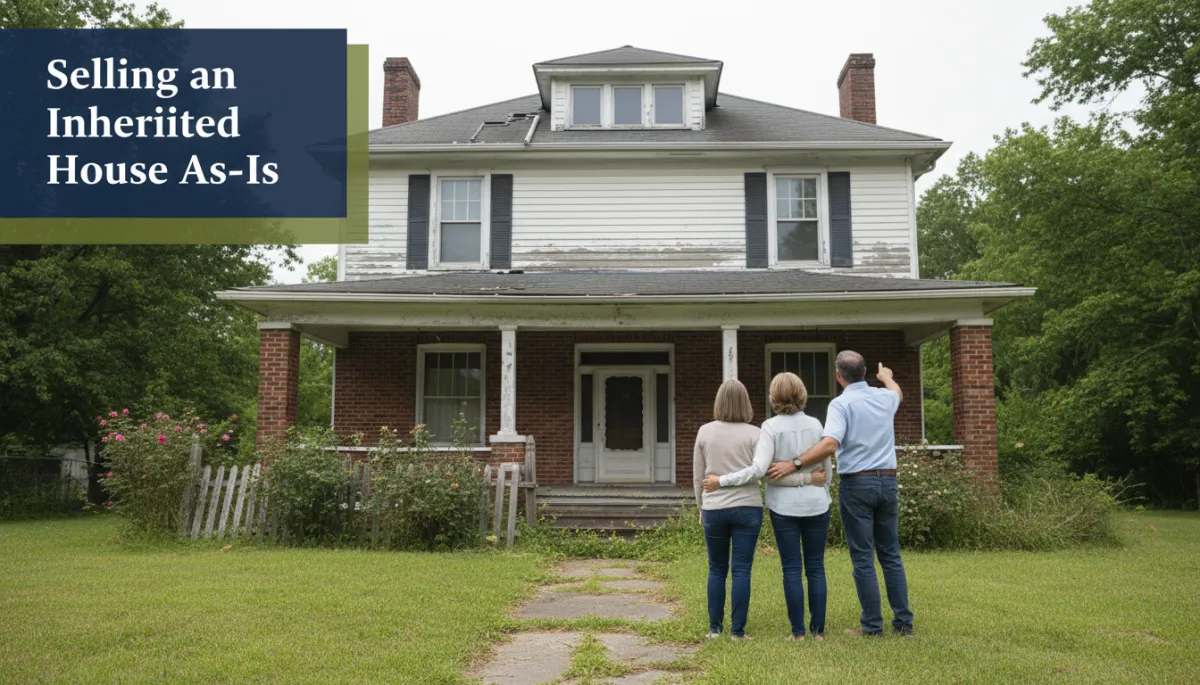
Suggested Featured-Image Description: Realistic photo of three adult family members from behind, standing together in a quiet Michigan neighborhood and looking at an older but livable mid-market house with mild exterior wear and slightly overgrown landscaping, conveying thoughtful shared decision-making and emotional connection without distress.
